
Can you drink from a Highland burn?
Clear water is not clean water. Deer, sheep, and peat silt are the reasons. Filter it, and expect the filter to clog.
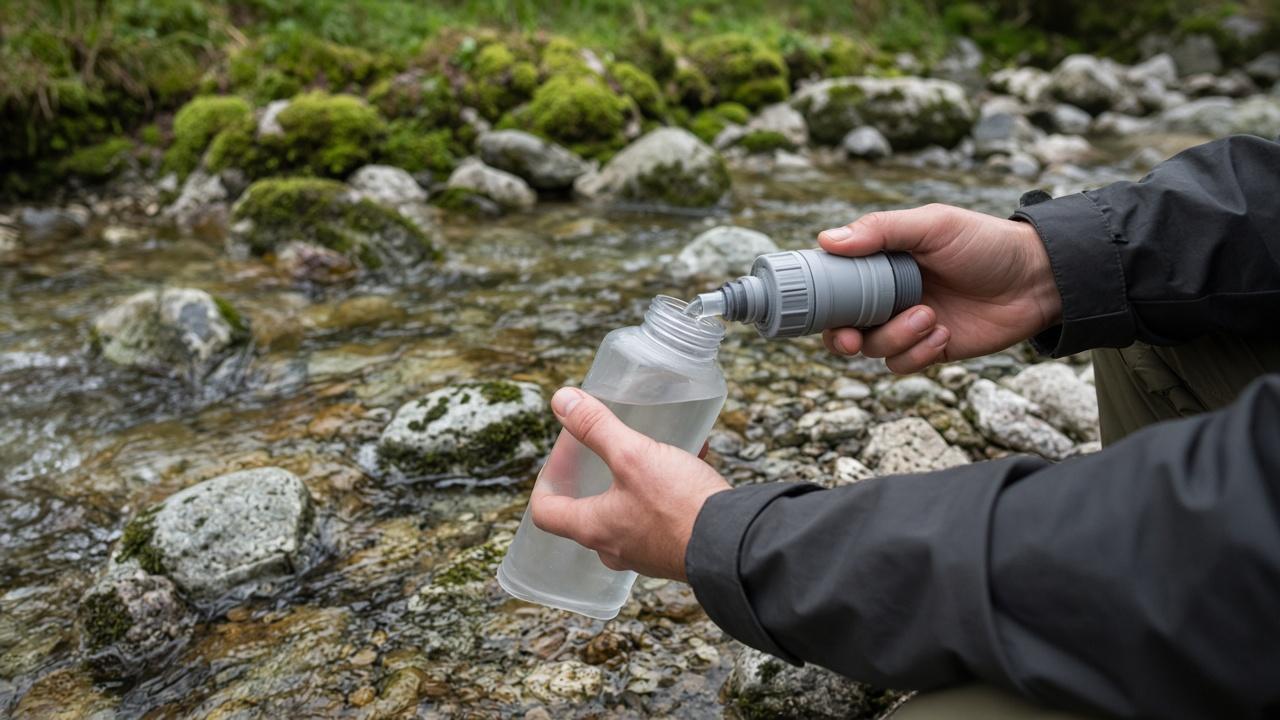
Essential Field Takeaways
- A clear burn can run out from under a dead deer or a grazed field a short way upstream. Looking clean is not a test.
- Hollow-fibre filters in the 0.1 to 0.2 micron range, such as a Sawyer Squeeze or a Katadyn BeFree, stop Giardia and Cryptosporidium. Peat silt blocks them.
- Pre-filter cloudy water through a clean cloth, and back-flush often. Otherwise the filter fails on the day you need it.
- Chlorine dioxide tablets need about four hours to deal with Cryptosporidium. They are the slow backup, not the quick one.
- Take water from a fast-moving gravel burn above the heaviest grazing. Avoid still lochans and brown bog pools.
Why the clear burn is the risky one
Highland water looks drinkable because the hills look empty. They are not sterile. Sheep and cattle graze the glens, and red deer, including dead animals in the peat, sit above a surprising number of pretty burns. Bacteria, Giardia, and Cryptosporidium do not colour the water. A carcass a few hundred metres upstream is invisible from the pool you stopped at.
Farms and track runoff add the same problem lower down, where a burn passes a field, a campsite, or a popular path. Above the grazing, in a steep gravel burn that is moving, the odds are better and they are still not a reason to skip the filter. One deer on the hill is enough.
Do not use the colour as a test
Peat-brown water is silty. Clear water can still be downstream of an animal. Both get filtered. Neither gets drunk as it is.
Why a Sawyer clogs on peat
A hollow-fibre filter with 0.1 to 0.2 micron pores stops the protozoa. The Sawyer Squeeze and the Katadyn BeFree are the usual ones. Scottish peat does not pass those pores. The silt is very fine, and a filter that sailed through alpine streams can choke on one peaty fill from Rannoch or a Cairngorm burn.
Scoop from a fast gravel run, where the water has dropped some of the silt, not from a brown pool or the edge of a lochan. If the water is visibly peaty, pour it through a clean cloth or a bandana into the dirty bottle first, then through the filter. Back-flush as soon as the flow slows, not at camp when your hands are cold. A clogged filter and a bladder of untreated water is a common last hour of a Munro day.
Chemical tablets are the spare, with a limit. Chlorine dioxide needs about four hours to be reliable against Cryptosporidium. That is a camp chore, not a drink at the burn. Iodine is a worse answer in cold, peaty water. Boiling works, and it costs the fuel you bought in town because you could not fly with it. On a short day, carrying water from the last tap is simpler than any of this. On Ben Nevis that tap is behind you by the Red Burn.
| Method | What it does here | The catch |
|---|---|---|
| Drink it straight | Nothing useful | Giardia, bacteria, and whatever is dead upstream. |
| Hollow-fibre filter, 0.1–0.2 micron | Takes out bacteria and protozoa as you pump | Peat silt clogs it. Pre-filter and back-flush. |
| Boiling | Makes the water safe | Uses the canister. Does not remove silt. |
| Chlorine dioxide tablets | Backup for protozoa | About four hours for Cryptosporidium. Not a trailside swallow. |
Where to fill
Use a burn that is moving over stone, well above the day's campsite and any field. Let the silt settle for a minute if you had no choice but to take peaty water, and still pass it through a cloth. Skip stagnant bog pools and the brown edge of a lochan. They hold more silt and more animals.
In spate, the water is also heavier with debris and the bank may be the dangerous part. The river guide is the check for whether you should be in that burn at all. Filtering assumes you can stand on the bank and scoop. It does not assume you can wade.
Water, ticks, and what to tell Mountain Rescue
The field guide's safety section: peat and filters, and how to ask for help if someone is ill.
Recommended Further Reading
Cape Wrath Trail: how many days, and how you get out
The Cape Wrath Trail is about 370 km of pathless ground from Fort William to the cape. Plan 12–18 days, carry a tent, and check that the Keoldale ferry and minibus are running before you depend on them.
Weather & HazardsScottish midge forecast: when they bite and what stops them
A Scottish midge forecast comes down to wind, humidity, and time of day. The season runs from late May through September. Midges stop flying above 6 mph. Check for ticks on the same trips.