
Bothy code: how to use a Scottish bothy
Unlocked shelters looked after by the Mountain Bothies Association. You cannot book one.
Essential Field Takeaways
- Bothies cannot be booked or reserved; they operate on open hospitality: whoever arrives must be welcomed inside.
- Always carry a tent: if a bothy is full or occupied by a work party, you must be self-sufficient and pitch outside.
- Pack out every scrap of rubbish: bothies have no council bin collection; food scraps attract vermin.
- Bring your own fuel: burning live estate timber or fence posts is vandalism; pack coal, peat bricks, or dried kiln logs.
- Sanitation ethics: use the bothy spade 200m away from water sources, buried at least 15cm deep.
What is an MBA Bothy?
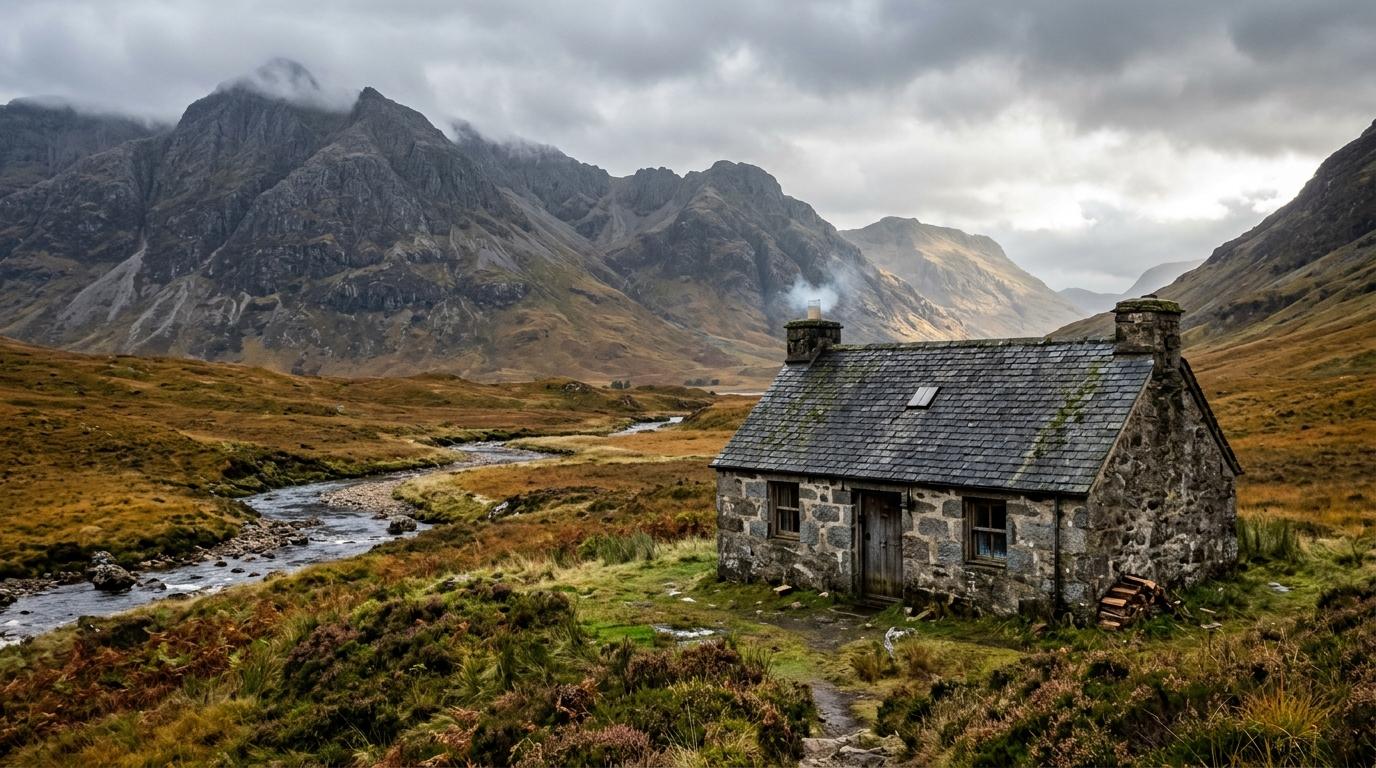
Dotted across the wildest glens of Scotland are approximately 100 unlocked stone cottages, former crofts, and shepherd sheilings known as bothies. Maintained by the Mountain Bothies Association (MBA)—a registered charity of unpaid outdoor volunteers—these shelters are free for any hiker, cyclist, or mountaineer to use.
Bothies possess no electricity, no running tap water, no central heating, and rarely any formal plumbing. They are rustic, stone-walled sanctuaries against gale-force rain and freezing mountain winds. In return for free access, visitors must adhere strictly to the Bothy Code.
The Golden Rule of Space
No matter how packed a bothy becomes, nobody is ever turned away in bad weather. Make room on the wooden sleeping platform or floor, share firewood, and welcome whoever steps through the door after nightfall.
You cannot reserve one, so carry a tent
A bothy cannot be booked. There is no lock to claim and no calendar. The Mountain Bothies Association looks after the buildings. It does not run them as hostel beds. On a wet Saturday the floor may already be full, or a work party may have the place. The building is a shelter, including in bad weather. It is not a plan you can hold.
Carry a tent on any walk that passes a bothy. If there is room, use it and leave it as you found it. If there is not, you pitch. A bothy-only plan with no tent is how people end up walking out in the dark, or squeezing into a building that cannot take them. Treat the bothy as a bonus. The tent is the plan.
The tent comes anyway
You cannot reserve a bothy, and nobody is obliged to have left you a space. If the bothy is the only shelter in the plan, the plan is missing a tent.
The 5 Key Principles of the Bothy Code
**1. Respect Other Users** Bothies are shared communal spaces. Keep noise down late in the evening. Large organized groups (commercial trekking companies or parties of more than 5-6) must not use bothies without prior estate permission, as they monopolize limited room.
**2. Respect the Bothy Building** Never light candles unattended, sweep the floor with the hearth brush before departing, and ensure all open hearth fires or woodburners are completely extinguished with ash cold to the touch before locking the latch.
**3. Firewood Ethics** Cutting live trees, sawing fallen woodland on sporting estates, or dismantling wooden deer fences is strictly forbidden. If you wish to have an evening fire, carry in your own kiln-dried logs, briquettes, or peat bricks in your rucksack or panniers.
**4. Pack It In, Pack It Out** Every tea bag, foil sachet, tin can, and leftover porridge pot must be carried out in your own rubbish bag. Leaving half-eaten food behind does not 'help the next hiker'—it attracts mice and rats that chew through emergency gear.
**5. Wilderness Toilet Protocol** If the bothy lacks a composting toilet, locate the bothy spade. Walk at least **200 metres (650 feet)** away from the bothy, burn, and any lochs or springs. Dig a hole 15 to 20 cm deep, deposit human waste, and pack out used toilet paper in a sealed ziplock bag or burn it safely if ground is wet.
MBA Bothy & Wild Camping Regulations Guide
Read the full Mountain Bothies Association protocol and Loch Lomond National Park Camping Management Zone rules.
Recommended Further Reading
Navigating a Munro in cloud: why a phone is not enough
A phone GPS is a fair aid in clear weather and a poor plan in Scottish hill cloud. Cold mist drains the battery, rain kills the screen, and a blue dot does not show a cliff. Carry the OS map for that hill and a baseplate compass, and leave the summit while you can still see the next cairn. On Ben Nevis the way down is the line of cairns, not the north edge.
Safety & BothiesLoch Lomond camping byelaws: where a permit is required
From 1 March to 30 September, camping management zones on the east shore of Loch Lomond require a National Park permit or a formal campsite. That is the shore the West Highland Way follows from around Balmaha through Rowardennan toward Inversnaid. Outside those zones, and from October to February, a small tent camp is allowed under the Scottish Outdoor Access Code. Sleeping in a vehicle is not camping, in either season.